Could CBG Help Rheumatoid Arthritis? What New Research Says About Cannabis and Inflammation
As cannabis research expands beyond THC and CBD, another cannabinoid is beginning to receive more scientific attention: CBG (cannabigerol).
A recently published
study explored at Rambam Health Care Campus in Israel looks at whether CBG may influence inflammatory pathways involved in rheumatoid arthritis (RA), an autoimmune condition known for joint pain, swelling, and chronic inflammation.

The findings are generating interest because the study looked beyond symptom relief and examined whether cannabinoids could affect immune processes associated with inflammation.
Before getting into the details, one important clarification:
This research does not show that cannabis or CBG cures rheumatoid arthritis. Instead, it offers an early look at how cannabinoids may interact with inflammation in a laboratory with mice.
What Is CBG?
CBG (Cannabigerol) is often referred to as the mother cannabinoid because many cannabinoids originate from precursor compounds during plant development.
Unlike THC, CBG is generally considered non-intoxicating, which is one reason researchers are increasingly studying it in wellness and inflammation-related discussions.
Consumers often compare:
- THC: commonly associated with psychoactive effects
- CBD: commonly explored for general wellness
- CBG: emerging interest around inflammatory pathways and focus-oriented formulations
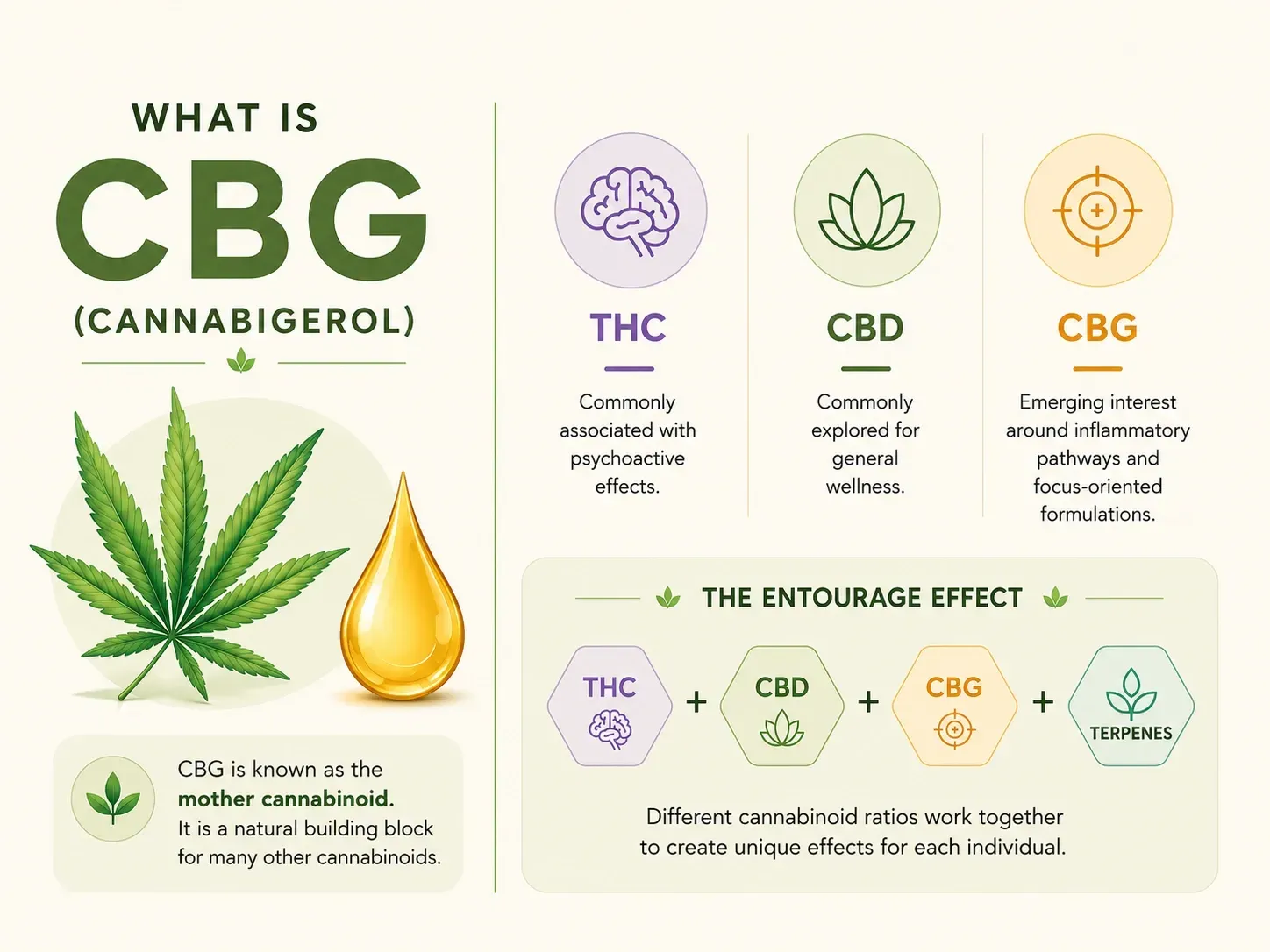
As cannabinoid science evolves, compounds beyond THC and CBD continue attracting attention. And we continuously expand our understanding of the
Entourage Effect of the different cannabinoid ratios on the body.
Understanding Rheumatoid Arthritis: Why Inflammation Matters
Rheumatoid arthritis differs from osteoarthritis. RA is an autoimmune condition, meaning the immune system mistakenly attacks healthy joint tissue. Over time, inflammation may contribute to:
- Joint stiffness
- Tenderness
- Swelling
- Reduced mobility
- Long-term tissue changes

Modern RA treatment typically focuses on reducing immune-driven inflammation under physician supervision.
Researchers studying cannabinoids want to understand whether compounds like CBG could eventually contribute to broader conversations around inflammation biology.
Inside the Research: How Scientists Studied CBG
To understand whether CBG could influence inflammation linked to rheumatoid arthritis, researchers focused on neutrophils, a type of immune cell involved in inflammatory responses and known to play a role in rheumatoid arthritis.
The study was conducted in two stages:
1. Laboratory Testing Using Human Neutrophils
Researchers isolated human neutrophils and observed how CBG affected their behavior under controlled laboratory conditions. They evaluated whether CBG influenced inflammatory activity, including:
- Release of inflammatory signalling molecules
- Immune cell activation
- Movement of neutrophils toward inflammatory signals
This stage was designed to understand how CBG interacts with immune mechanisms associated with inflammation.
2. Testing in a Mouse Model of Arthritis
After observing effects in isolated human immune cells, researchers tested CBG in mice with experimentally induced inflammatory arthritis.The goal was to determine whether the immune-related findings could translate into measurable changes in arthritis severity and inflammatory responses in a living system.
Importantly, this research did not evaluate consumer cannabis products or test CBG in people with rheumatoid arthritis. The objective was to study biological mechanisms, not establish a treatment for humans.
Key Findings: What Researchers Observed
The
study reported several noteworthy findings.
- Reduced Inflammatory Signaling
Researchers observed decreases in inflammatory activity associated with cytokines such as TNF-α and IL-6. - Reduced Immune Cell Movement
CBG appeared to influence how neutrophils migrated toward inflammatory signals. - Improved Arthritis Indicators in Preclinical Models
Mouse demonstrated lower inflammatory burden and improved arthritis scoring.
These findings help explain why cannabinoids continue receiving scientific attention.
However, it’s important to remember:
Preclinical findings are not equivalent to proven human outcomes.
Why This Research Still Matters
Even with limitations, studies like this help researchers ask better questions. The significance isn’t that CBG becomes a treatment overnight.
The significance is that scientists are exploring new cannabinoid pathways beyond THC and CBD and investigating how those compounds interact with immune signaling.
For consumers interested in cannabis education, understanding the difference between early research and established medical evidence is essential.
Explore CBG Products at Doobie Nights in Santa Rosa
At Doobie Nights, customers can explore a broad selection of cannabinoid formats, from flower and edibles to tinctures and wellness-focused options. Current menus have included products featuring CBG-forward formulations and balanced cannabinoid blends designed for consumers interested in cannabinoids beyond traditional THC experiences.
The Doobie Nights in Santa Rosa caters to the different types of the products with CBG;
- Dime Industries Rapid Onset Capsules featuring cannabinoid blends including CBG
- Gummies combining THC + CBG + THCV profiles
Product availability changes frequently, so shoppers can
browse current inventory or speak with a budtender to learn about emerging cannabinoid categories.
Final Thoughts
The newest CBG research opens an interesting scientific conversation. What makes this study worth following is not a promise of a breakthrough; it’s the possibility that cannabinoids may eventually contribute to a deeper understanding of inflammation and immune signalling.
For now, the evidence remains early. But for consumers curious about cannabinoids beyond THC and CBD, CBG has officially entered the research spotlight.
Explore the detailed insights of the research
here.
Frequently Asked Questions About CBG and Rheumatoid Arthritis
1. Can CBG reduce inflammation associated with rheumatoid arthritis?
Current research suggests CBG may influence inflammatory pathways involved in rheumatoid arthritis, but the evidence is still early-stage. More human studies are needed before conclusions can be made about real-world outcomes.
2. Has CBG been tested in people with rheumatoid arthritis?
No. The research highlighted in this article involved isolated human immune cells studied in laboratory conditions and testing in mice. Human clinical trials are still needed.
3. Is CBG different from CBD for inflammation?
Yes. CBG and CBD are different cannabinoids with different biological characteristics. Researchers are currently exploring whether CBG interacts with inflammatory pathways differently than CBD, but there is not enough evidence to say one is better for rheumatoid arthritis.
4. How do consumers explore products containing CBG?
Consumers interested in cannabinoids often explore products based on cannabinoid profile, format, and desired experience. Doobie Nights Cannabis Dispensary in Santa Rosa offers CBG containing products in categories such as capsules, gummies and tinctures.
ADDITIONAL RECENT POSTS